


Why this move could change U.S. Soccer forever
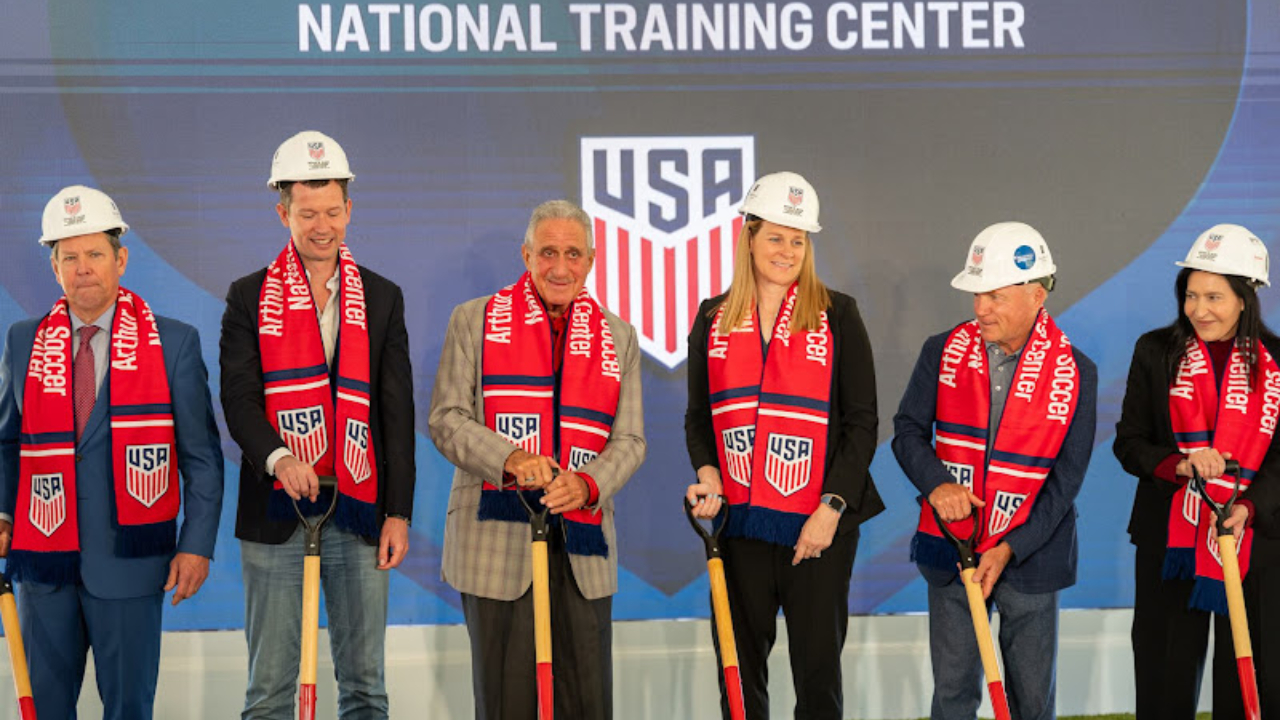
In a significant move for American soccer, U.S. Soccer, the governing body for the sport in the United States, is relocating its headquarters and building a new training center in the Atlanta, Georgia area. This change marks a significant shift from its long-standing base in Chicago and is part of the federation’s effort to enhance the sport both domestically and internationally.
The primary reason for relocating to Atlanta is to establish a unified, top-notch infrastructure for all levels of U.S. soccer. Traditionally, U.S. Soccer’s national teams, including the men’s national team (USMNT), women’s national team (USWNT), youth teams, and extended programs, have trained in various locations across the country based on scheduling and logistics. By establishing a centralized National Training Center and headquarters, the federation aims to provide consistent, high-quality facilities that compete with those of other leading soccer nations. This approach supports player development, coaching education, performance analysis, and long-term competitiveness on the global stage.
Atlanta was chosen for several reasons: its growing soccer culture, strong support from the MLS club Atlanta United, and favorable climate. Additionally, philanthropist and Atlanta United owner Arthur M. Blank has pledged a significant $50 million investment to support the construction and development of the training center, making the project practical and sustainable.
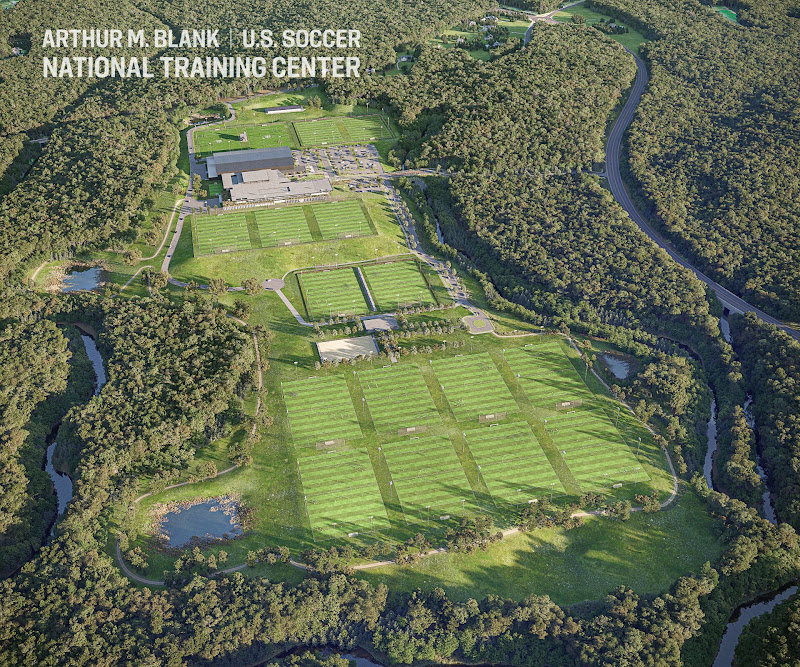
The relocation plan began to take shape in earnest in recent years, with U.S. Soccer starting the move from Chicago, where the federation had been based since 1991. The specific site of the Atlanta National Training Center was chosen after careful evaluation, and construction is underway with plans for the facility to open in the spring as the 2026 World Cup approaches. The center will serve as the federation’s new operational hub, hosting daily training, administrative offices, and support services for all 27 U.S. Soccer national teams.
Once completed, the Atlanta facility will feature top-notch training fields, strength and conditioning equipment, medical and recovery spaces, and performance analysis technology. It’s designed not just as a physical training environment, but also as a central hub for coaching education, referee development, and community outreach. The move highlights U.S. Soccer’s commitment to growing the sport at all levels, improving player pathways, and preparing teams more effectively for major international competitions, including the 2026 FIFA World Cup, which the United States is co-hosting. This relocation represents a historic investment in the future of American soccer. By building a permanent home that reflects the sport’s growth and ambition, U.S. Soccer is setting itself and its national teams up for greater success on the world stage in the years ahead.